Original: $11.39
-70%$11.39
$3.42The Story
Pajama Cardinal Overview
-
Common Name: Pajama Cardinalfish
-
Scientific Name: Sphaeramia nematoptera
-
Family: Apogonidae (Cardinalfishes)
-
Origin: Western Pacific – including Indonesia, Papua New Guinea, and the Great Barrier Reef
-
Size: Up to 3 inches (7.5 cm)
-
Lifespan: 5–6 years (in a well-maintained aquarium)
🌈 Appearance
-
Body: Oval-shaped, tall and compressed
-
Color Pattern:
-
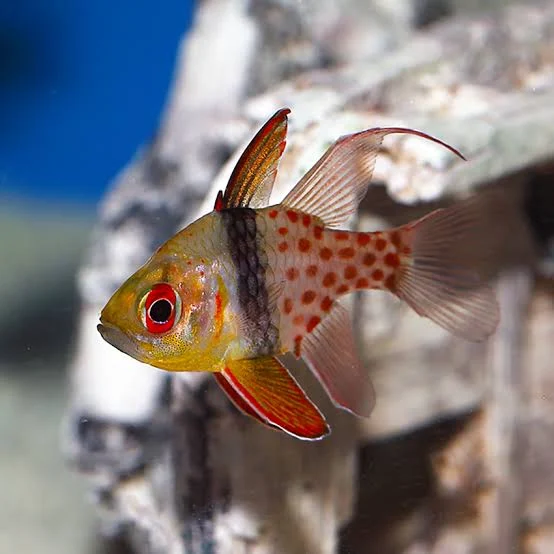
Greenish-yellow face and front half
-
Bright red eyes
-
Distinct black vertical band mid-body (like a "belt")
-
Rear half is silver with red/orange polka dots (hence the “pajama” look)
-
-
Sex Differences: Not easily distinguishable; females may be rounder when breeding
🏝️ Natural Habitat
-
Found in calm lagoons and reef edges
-
Often hide among branching corals, seagrass, or under ledges during the day
-
Nocturnal tendencies – more active at dusk and night
🐠 Aquarium Care
Tank Requirements:
-
Minimum Tank Size: 30 gallons (114 liters) for a small group
-
Best Setup:
-
Plenty of live rock for hiding
-
Open swimming space
-
Dim or moderate lighting (bright lights can stress them)
-
-
Reef Safe: Yes – won't bother corals or inverts
Water Parameters:
-
Temperature: 72–78°F (22–26°C)
-
pH: 8.1–8.4
-
Salinity: 1.020–1.025 SG
-
Ammonia/Nitrites: 0 ppm
-
Nitrates: <20 ppm preferred
🤝 Behavior & Compatibility
-
Temperament: Very peaceful and calm
-
Schooling: Best kept in small groups (3–6). Single individuals may become shy or stressed. Avoid odd numbers in small tanks due to pecking order aggression.
-
Tankmates: Ideal for community reef tanks. Avoid large, aggressive fish like lionfish or triggers.
🍽️ Diet
-
Feeding Type: Carnivore
-
Diet:
-
Frozen mysis and brine shrimp
-
Finely chopped seafood
-
Enriched live foods (occasional)
-
High-quality marine pellets/flakes
-
-
Feed 1–2 times daily. They are slow eaters, so ensure they aren’t outcompeted.
✅ Pros
-
Reef safe
-
Peaceful community fish
-
Easy to care for
-
Adaptable to a wide range of setups
-
Can be tank-bred, making them hardier and more sustainable
❌ Cons
-
Can be bullied by aggressive tankmates
-
May show minor aggression in small groups (hierarchy)
-
Easily stressed by sudden lighting or loud movement
💡 Breeding
-
Known to mouthbrood – males carry eggs in their mouth
-
Breeding possible in captivity, especially with stable pairs
-
Requires a separate rearing tank for fry due to predation
Summary
| Category | Details |
|---|---|
| Difficulty | Beginner to Intermediate |
| Temperament | Peaceful |
| Reef Safe | Yes |
| Tank Size (Min) | 30 gallons (group), 20 for single |
| Max Size | 3 inches (7.5 cm) |
| Diet | Carnivore |
| Lighting | Moderate |
| Water Flow | Low to Moderate |
Description
Pajama Cardinal Overview
-
Common Name: Pajama Cardinalfish
-
Scientific Name: Sphaeramia nematoptera
-
Family: Apogonidae (Cardinalfishes)
-
Origin: Western Pacific – including Indonesia, Papua New Guinea, and the Great Barrier Reef
-
Size: Up to 3 inches (7.5 cm)
-
Lifespan: 5–6 years (in a well-maintained aquarium)
🌈 Appearance
-
Body: Oval-shaped, tall and compressed
-
Color Pattern:
-
Greenish-yellow face and front half
-
Bright red eyes
-
Distinct black vertical band mid-body (like a "belt")
-
Rear half is silver with red/orange polka dots (hence the “pajama” look)
-
-
Sex Differences: Not easily distinguishable; females may be rounder when breeding
🏝️ Natural Habitat
-
Found in calm lagoons and reef edges
-
Often hide among branching corals, seagrass, or under ledges during the day
-
Nocturnal tendencies – more active at dusk and night
🐠 Aquarium Care
Tank Requirements:
-
Minimum Tank Size: 30 gallons (114 liters) for a small group
-
Best Setup:
-
Plenty of live rock for hiding
-
Open swimming space
-
Dim or moderate lighting (bright lights can stress them)
-
-
Reef Safe: Yes – won't bother corals or inverts
Water Parameters:
-
Temperature: 72–78°F (22–26°C)
-
pH: 8.1–8.4
-
Salinity: 1.020–1.025 SG
-
Ammonia/Nitrites: 0 ppm
-
Nitrates: <20 ppm preferred
🤝 Behavior & Compatibility
-
Temperament: Very peaceful and calm
-
Schooling: Best kept in small groups (3–6). Single individuals may become shy or stressed. Avoid odd numbers in small tanks due to pecking order aggression.
-
Tankmates: Ideal for community reef tanks. Avoid large, aggressive fish like lionfish or triggers.
🍽️ Diet
-
Feeding Type: Carnivore
-
Diet:
-
Frozen mysis and brine shrimp
-
Finely chopped seafood
-
Enriched live foods (occasional)
-
High-quality marine pellets/flakes
-
-
Feed 1–2 times daily. They are slow eaters, so ensure they aren’t outcompeted.
✅ Pros
-
Reef safe
-
Peaceful community fish
-
Easy to care for
-
Adaptable to a wide range of setups
-
Can be tank-bred, making them hardier and more sustainable
❌ Cons
-
Can be bullied by aggressive tankmates
-
May show minor aggression in small groups (hierarchy)
-
Easily stressed by sudden lighting or loud movement
💡 Breeding
-
Known to mouthbrood – males carry eggs in their mouth
-
Breeding possible in captivity, especially with stable pairs
-
Requires a separate rearing tank for fry due to predation
Summary
| Category | Details |
|---|---|
| Difficulty | Beginner to Intermediate |
| Temperament | Peaceful |
| Reef Safe | Yes |
| Tank Size (Min) | 30 gallons (group), 20 for single |
| Max Size | 3 inches (7.5 cm) |
| Diet | Carnivore |
| Lighting | Moderate |
| Water Flow | Low to Moderate |